For objects by Adam Fearon has created a series of hand painted Satyr plates. Satyrs represented everything that was frowned upon in ancient Greek society: drunkenness, bawdiness and overt sexuality. The Satyr figure helped define what was ‘acceptable’ behaviour and allowed both an opportunity for comedy and an outlet to fantasise about the perverse and subversive.
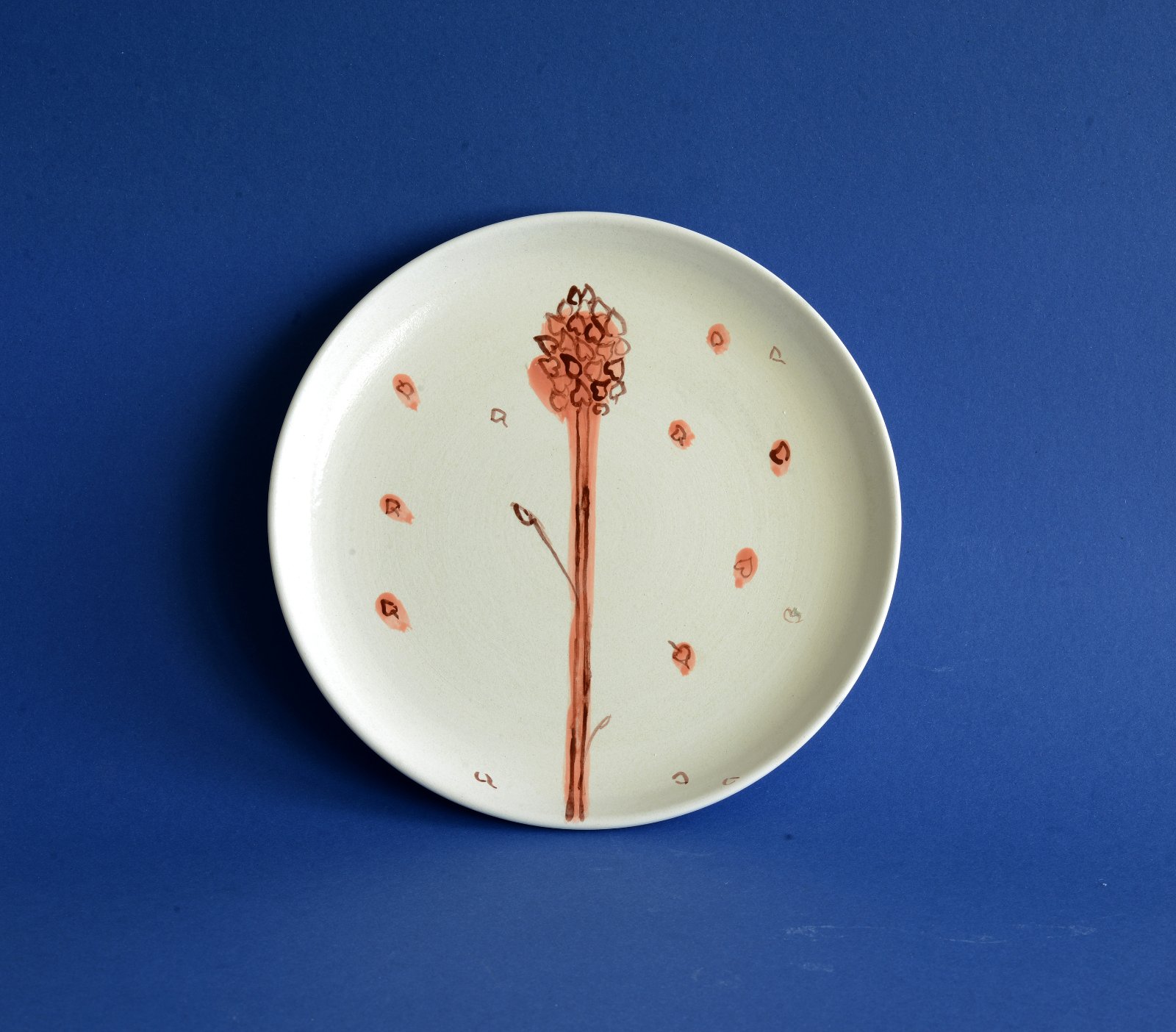
Satyr Plate (Thyrsus)
Thyrsus was the staff used to identify Dionysus and his followers, including satyrs and nymphs.
Academics disagree about what the staffs of ancient pottery actually depict, but almost certainly its not the pine-cone dripped in honey as became common understanding in the 19th century.
Most likely they are images of stalks wrapped in ivy that over the centuries became increasingly stylised.
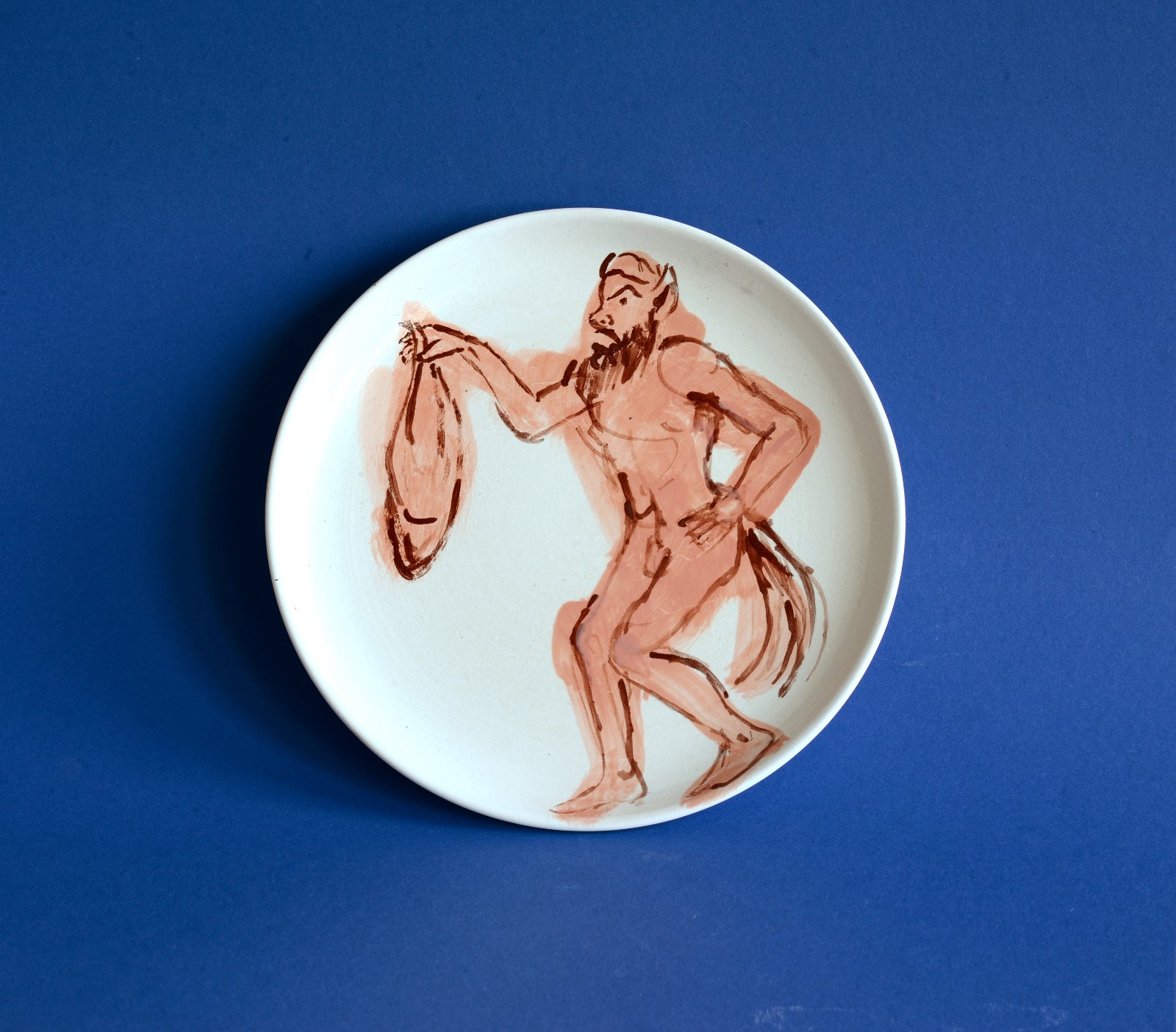
Satyr Plate (Securing the Bag)
Satyr secures the bag.
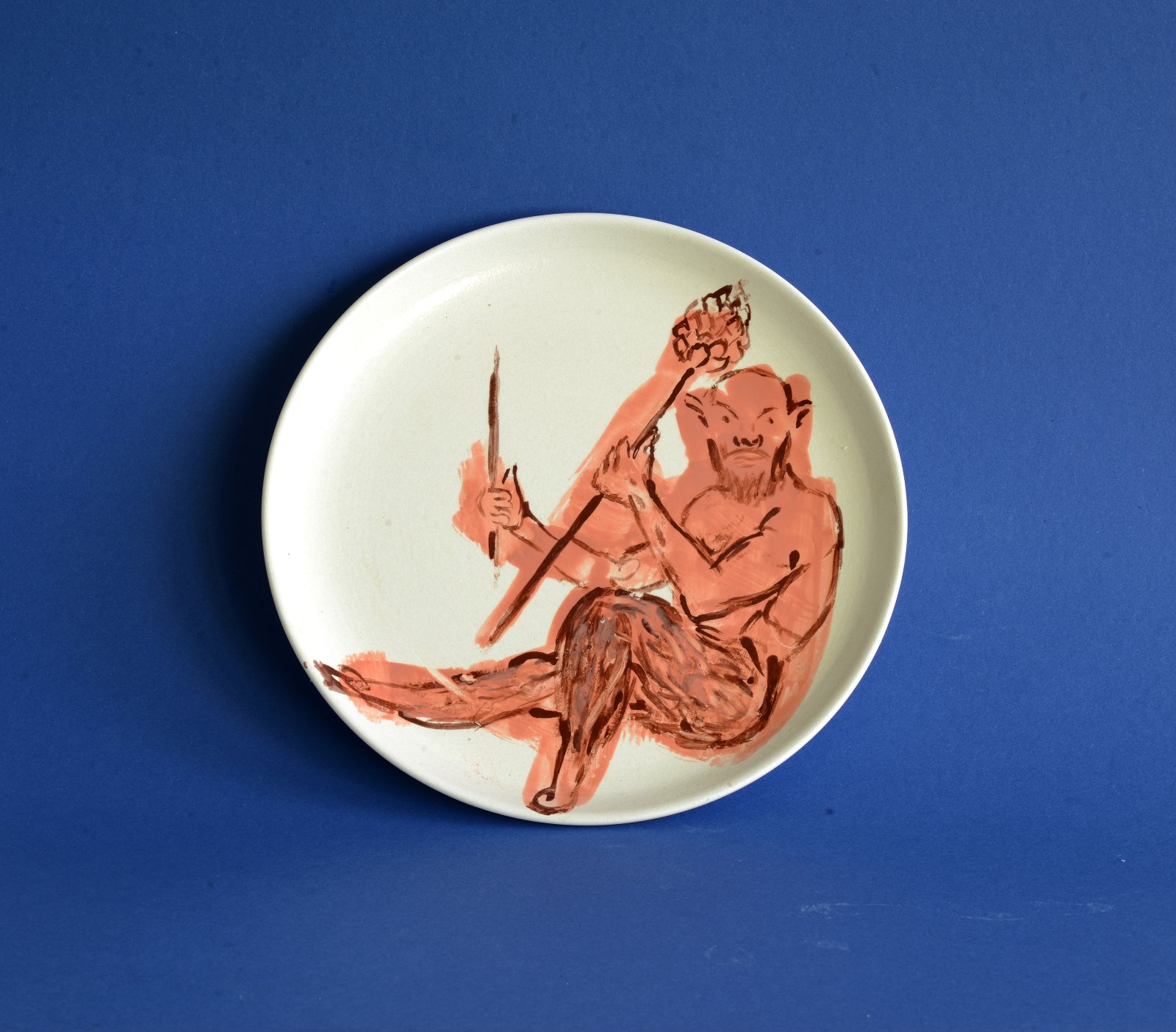
Satyr Plate (Holding Thyrsus)
Thyrsus was the staff used to identify Dionysus and his followers, including satyrs and nymphs.
Academics disagree about what the staffs of ancient pottery actually depict, but almost certainly its not the pine-cone dripped in honey as became common understanding in the 19th century.
Most likely they are images of stalks wrapped in ivy that over the centuries became increasingly stylised.
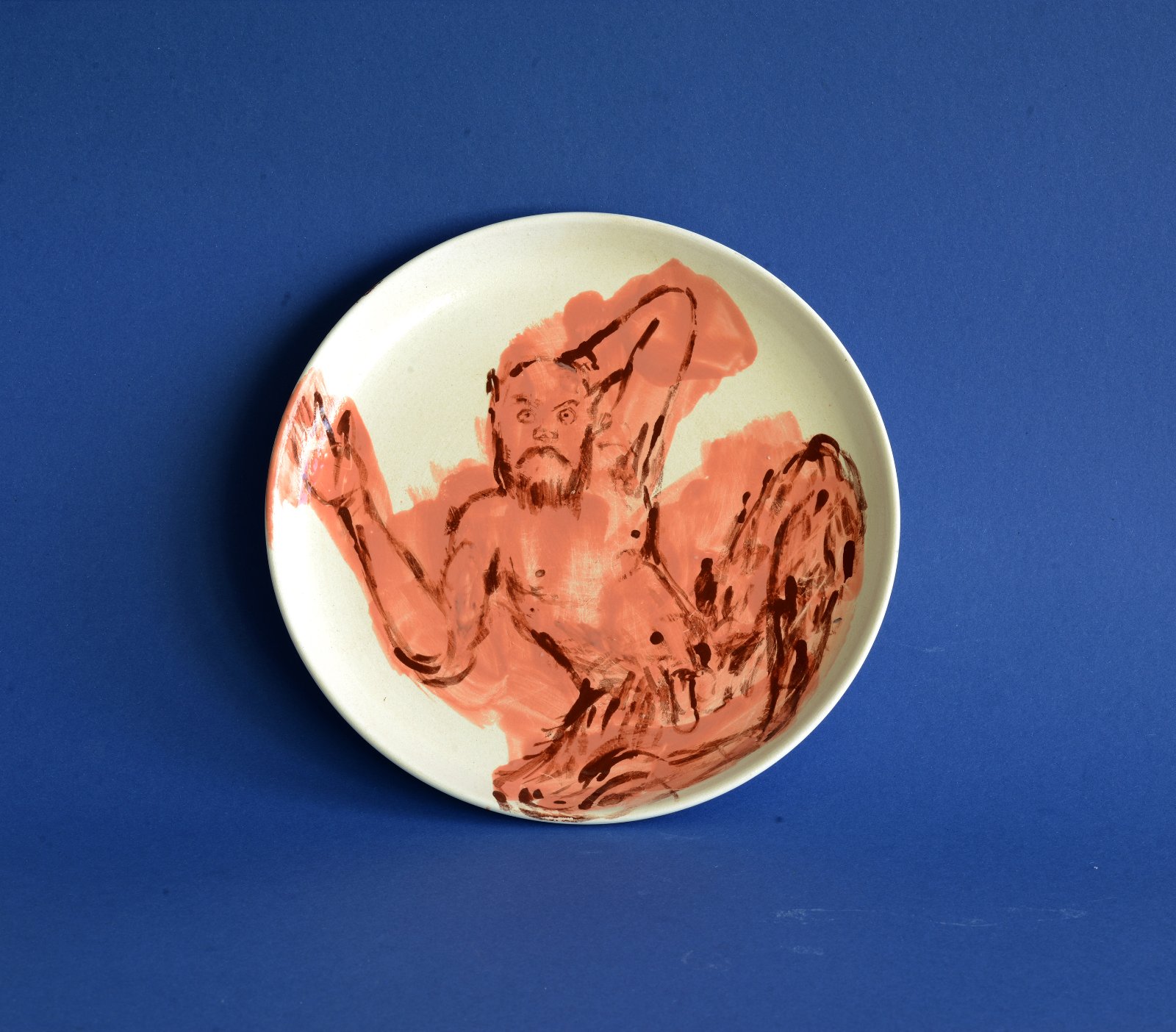
Satyr Plate (Reclining)
Satyr reclining. Not Standing.
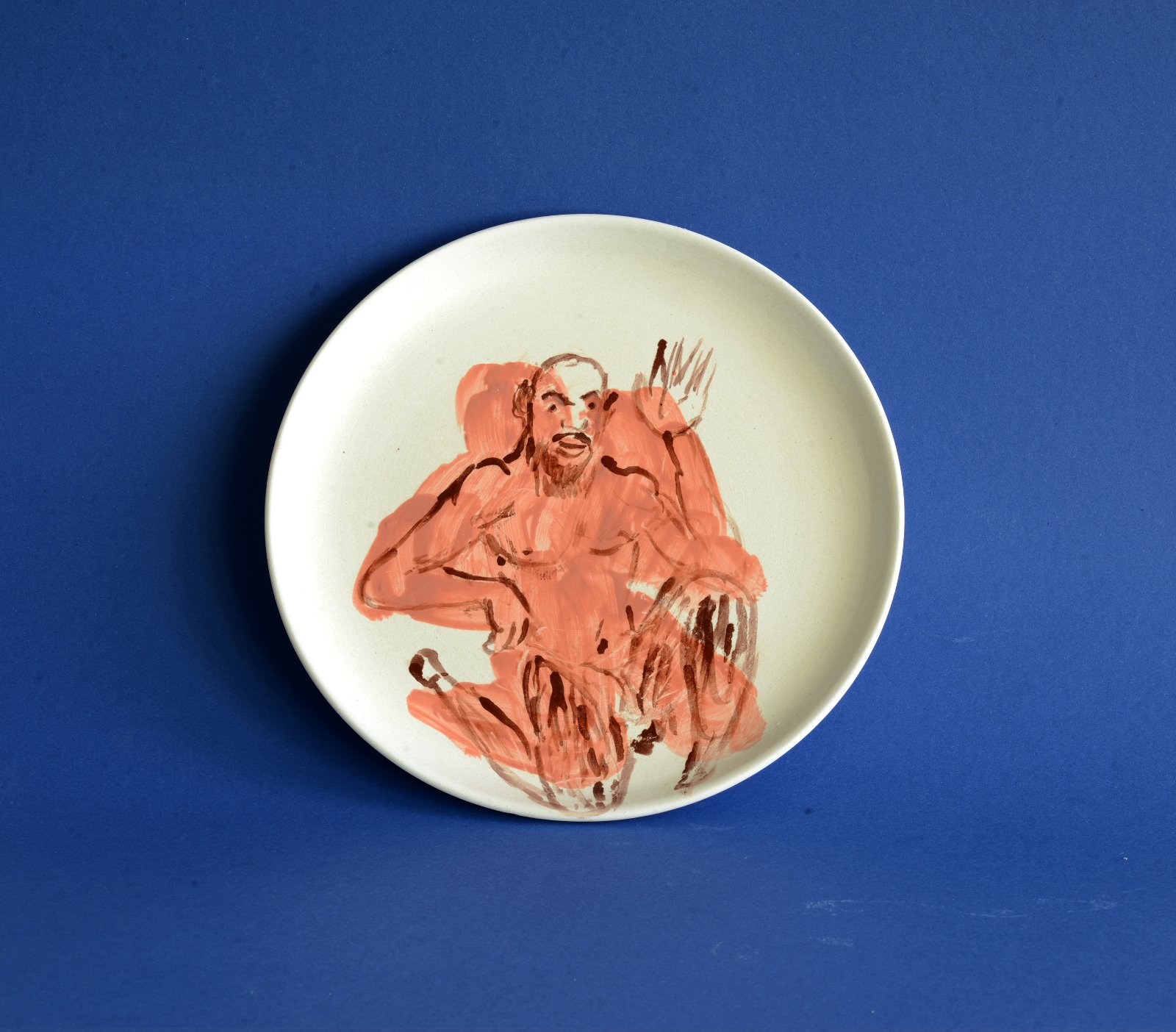
Satyr Plate (Reclining and waving)
Satyr reclining. And waving.
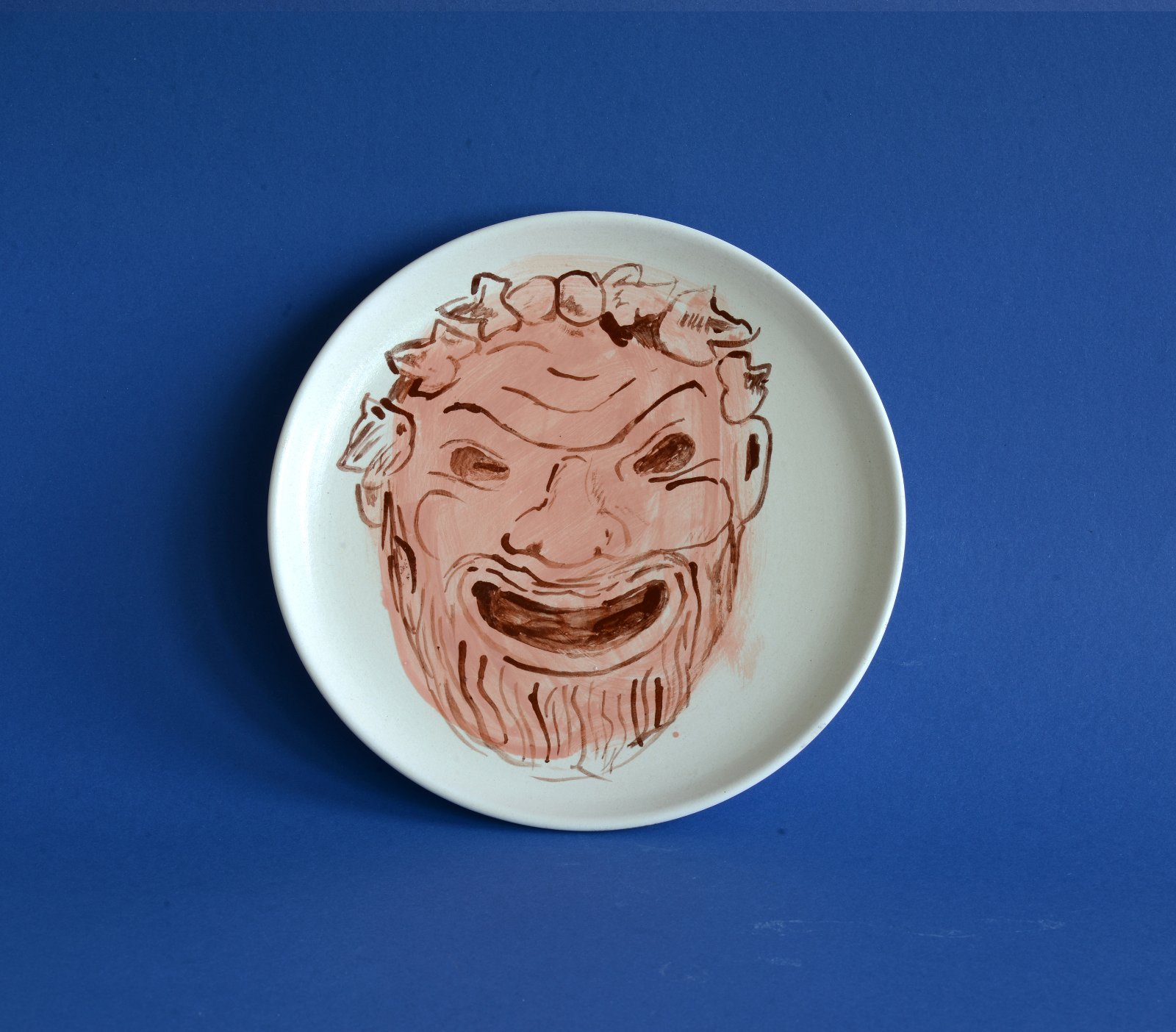
Satyr Plate (Mask)
Satyr mask allowed amateur citizen-actors in ancient Greece to transform themselves into the wild, comedic followers of Dionysus. Beyond amplifying expression and voice for large audiences, the mask provided anonymity, allowing performers to freely embrace the uninhibited and vulgar antics of satyr plays.
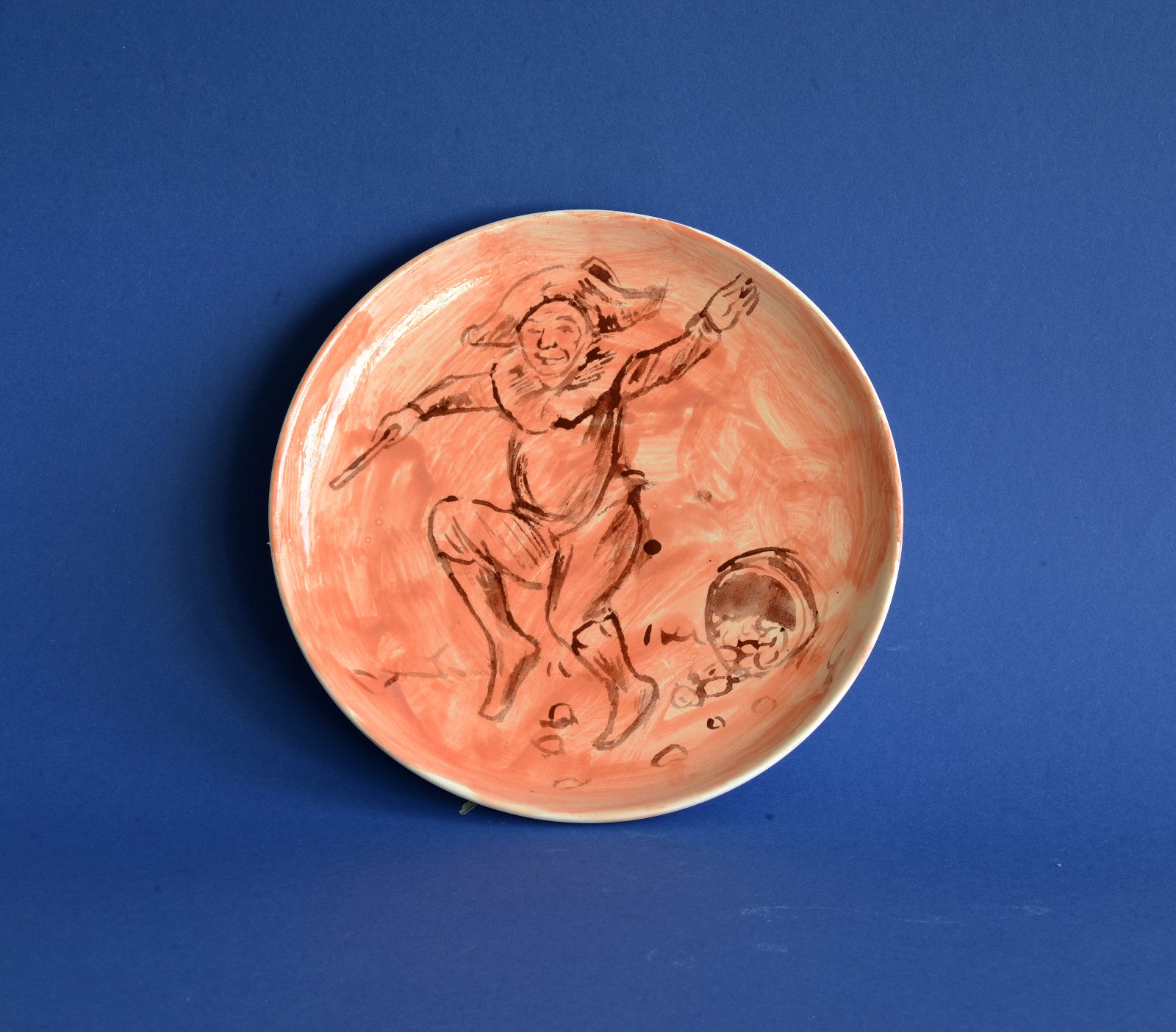
Satyr Plate (Leprechaun)
Leprechauns are not Satyrs. Can an analogy be made? Maybe. Maybe not.
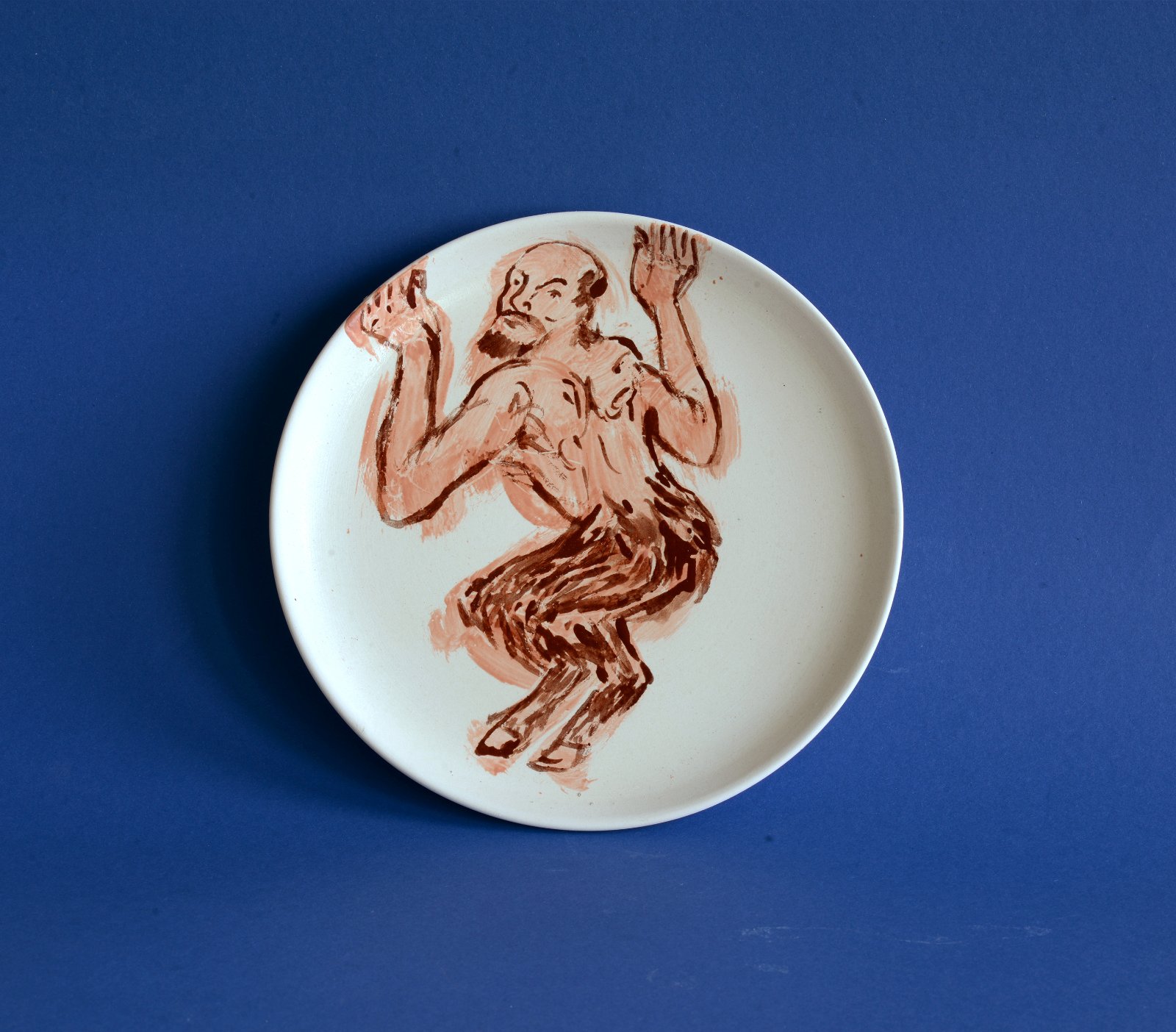
Satyr Plate (Presenting)
Satyr turning. Presenting?
20cm Diameter.
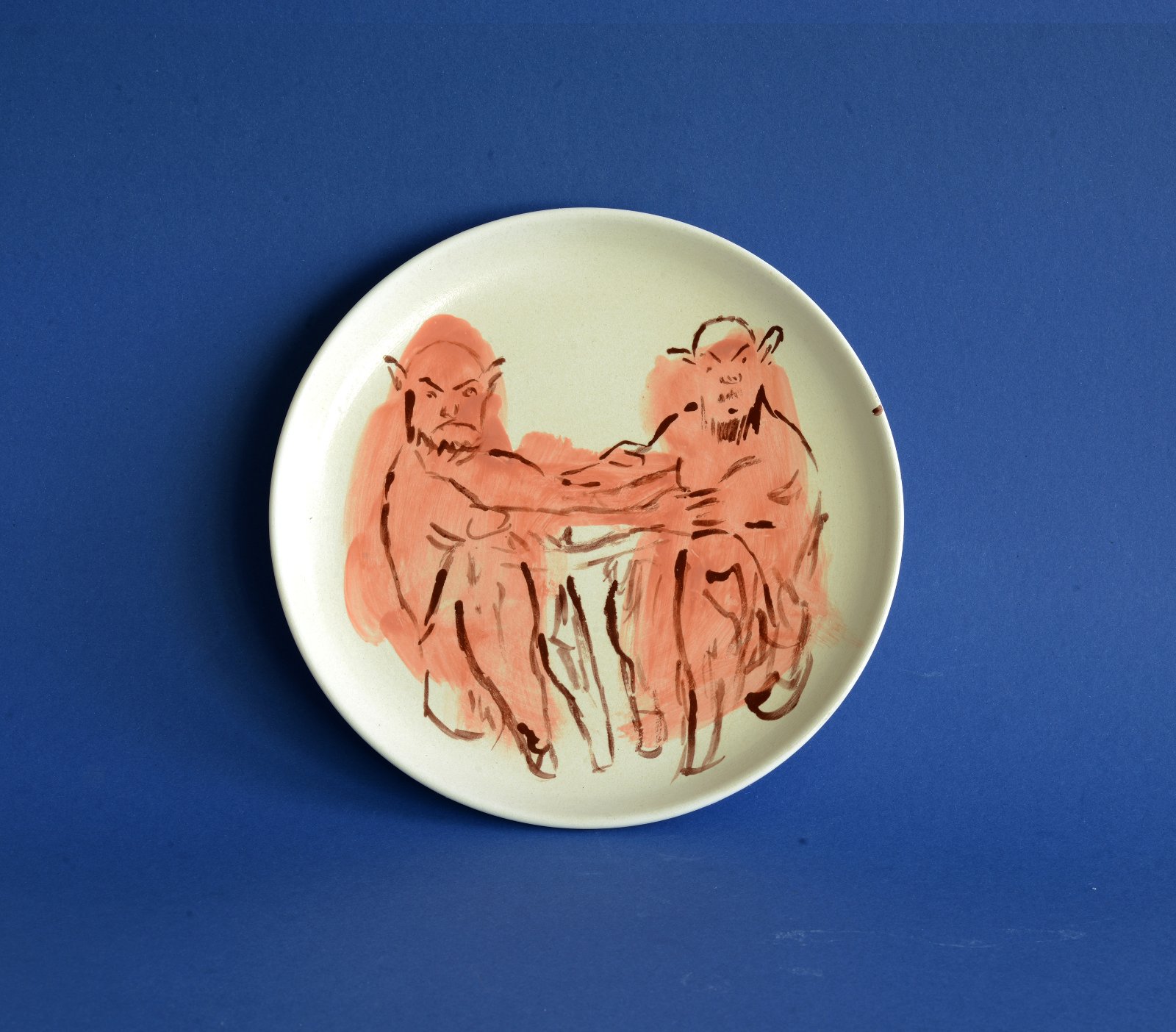
Satyr Plate (Clinging)
Two Satyrs entwined. Clinging?
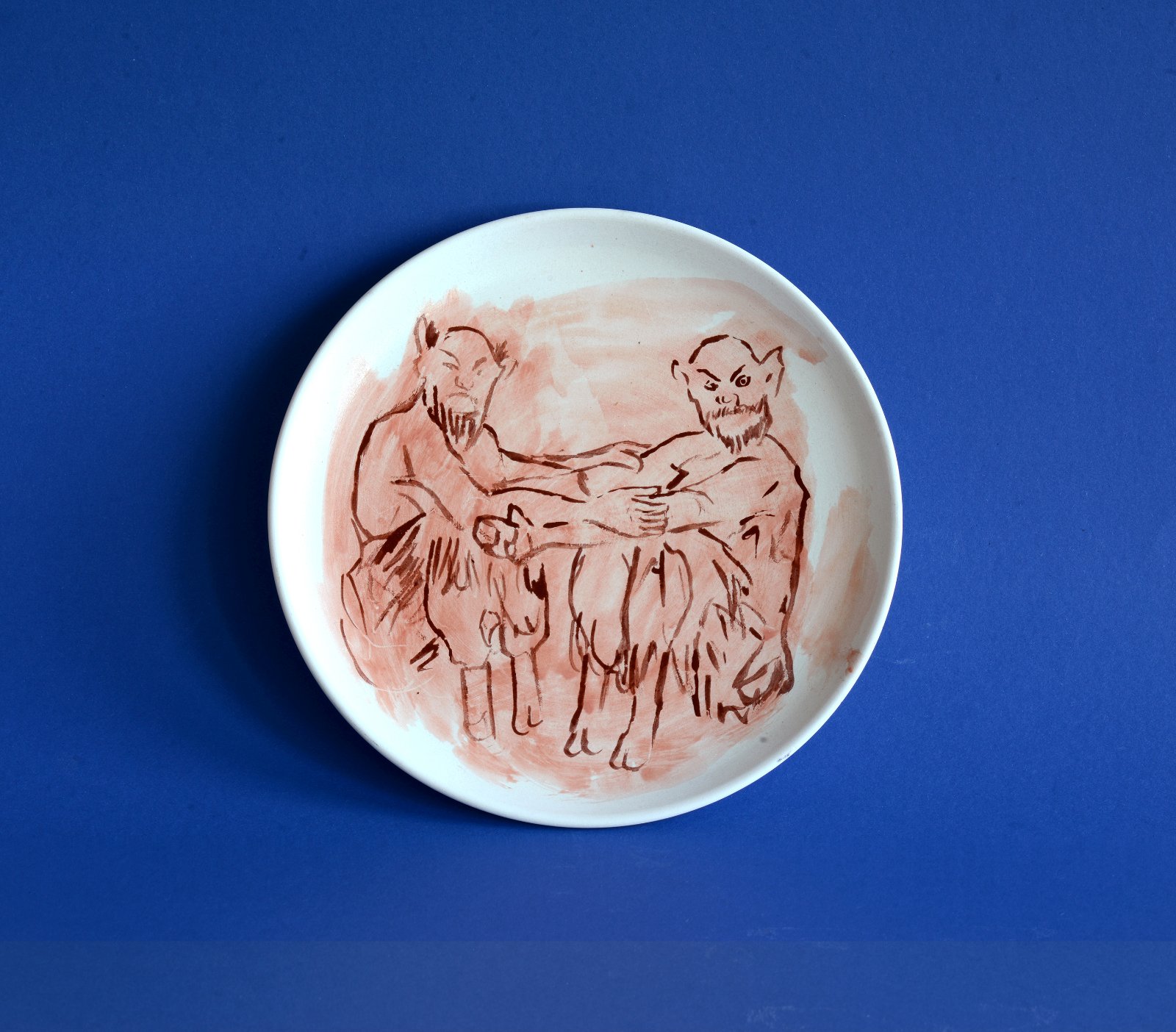
Satyr Plate (Entwined)
Two satyrs clinging. Entwined?